3.jpg)
Published April 16, 2024
What Is Kintsugi? The Japanese Art That Makes Broken Things More Beautiful By Realtor.com

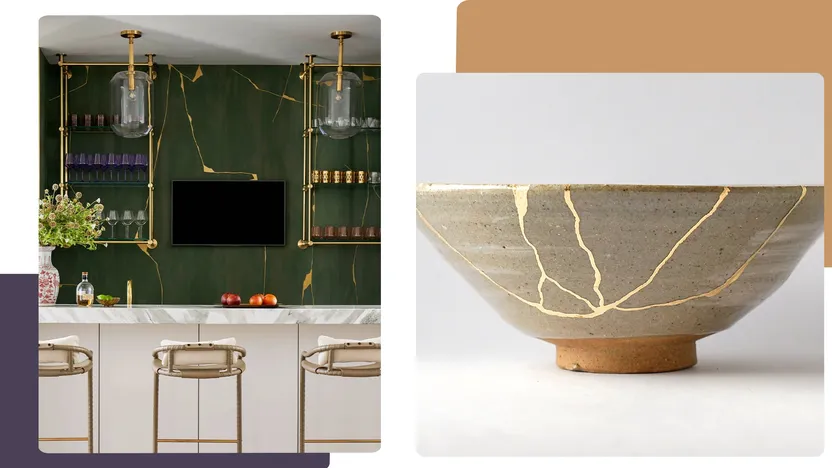

We all have that sinking feeling when we break something. Looking at the jagged pieces, we realize the once perfectly whole object is impossibly fragmented and should be chucked in the trash.
We’re here to politely implore you, instead of tossing it, try kintsugi on it instead.
Indeed, this Japanese technique of repairing cracked pottery with gold flourishes, which highlights imperfections, is trending in a big way.
Yup, the idea that broken can be beautiful is at the heart of kintsugi. Learn more about it here—and maybe you’ll rehab something this way for your home.
What is kintsugi?

(Getty Images)
Kintsugi is the Japanese art of transforming a broken piece of pottery or china by highlighting the lines where the pieces have separated, often with gold glue and a lacquer coating.
Kintsugi, which dates to the 15th century, comes from the Japanese words for golden (kin) and repair (tsugi).
But this Asian technique, an art form akin to mosaics and jewelry making, also has roots in two other beliefs from this part of the world, explains Pamela O’Brien, principal designer at Pamela Hope Designs.
“Kintsugi combines the feng shui concept that broken items need to be repaired and the wabi-sabi idea that imperfection is perfectly fine, with the result being an excellent and decorative solution,” she says.
Making these repairs into “something attractive and noticeable embraces the kintsugi concept that broken things are not necessarily worthless and deserve our time and effort,” O’Brien continues.
Kintsugi in pop culture

(Walt Disney Studios Motion Pictures)
Why is kintsugi in the zeitgeist now? Pop culture references to kintsugi abound.
Kylo Ren (played by Adam Driver) of “Star Wars” is apparently on board. The dark warrior’s broken mask was fixed with vividly red glue running along the fresh seams.
In an episode of “Ted Lasso,” club owner Rebecca (Hannah Waddingham) is introduced to the concept that a broken vessel (a metaphor for life in general) can be made stronger and better with kintsugi.
In the series finale, Nate (Nick Mohammed), who left the Lasso fold but returns in the end, is shown rehanging the “Believe” sign he once ripped up in a fit of anger. The new sign—carefully repaired with the kintsugi technique—symbolizes new beginnings.
How is kintsugi used?
Beverly Solomon of the eponymous design firm knows kintsugi intimately.
She and her husband, Pablo Solomon, have had a long upcycling career from their early days in the field, outfitting cafes with furniture. The two once took 10 broken antique oak chairs and turned them into a usable set of eight.
These fresh iterations became popular furnishings for their business “because they radiated creativity and character, which is the very essence of wabi-sabi,” she says.
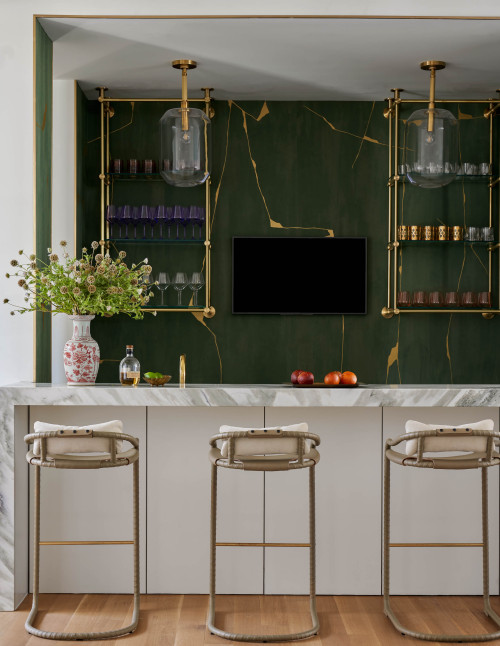
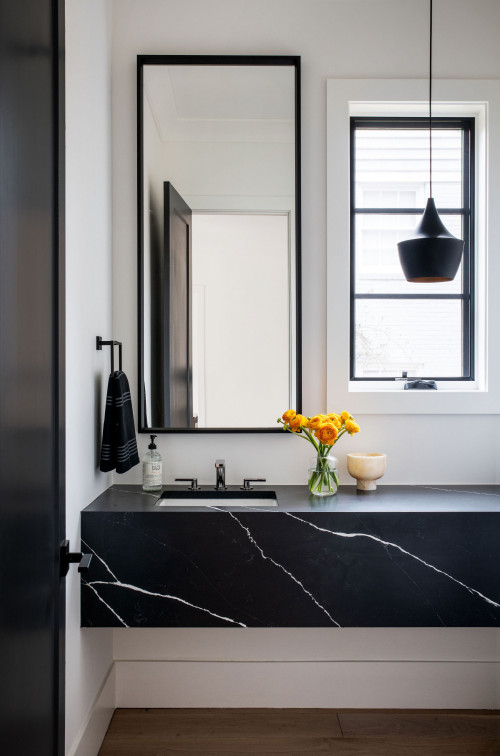
Kintsugi can also be approximated, as seen in the photos here. Bright white veins might snake along a stone sink in a bathroom, and purposeful lines can decorate wallpaper, appearing to mimic broken (then fixed) china pieces.
Why is kintsugi appealing?
The benefits of kintsugi—or any upcycling approach you want to try—are multifold, say the experts.
“A good repair job is gratifying to your soul and your bank account,” says O’Brien. And you’re adding interest to a piece and a newfound style, making the broken item even better.
“You also achieve humble satisfaction—you’re not trying to impress with kintsugi—it’s more about being at peace with yourself,” adds Solomon.
Kintsugi also serves as a way to “respect an object as a representation or memory of loved ones, experiences, and feelings,” she continues, as you’re re-creating a family legacy with things to cherish for generations.
This broken-as-better method can affect you mentally, too.
“Just like with wabi-sabi, allowing your mind to embrace the imperfect is freeing and boils down to having the confidence to love these old things that are special to you,” notes Solomon.
How to use kintsugi as home decor
If you’re going to tackle a repair job, give it your all or find a pro who can.
“For this technique to work, you have to fix things skillfully,” points out Solomon. Without a solid approach, your work might come off as sloppy, which is disrespectful to the object you’re working on.
Any ceramic item is up for grabs when it comes to kintsugi, and these pieces “make great decorations for outdoor furniture and as tabletops for plant stands,” says Solomon.
But when it comes to everyday dishes or even a special piece of porcelain, it’s best to display your work rather than eat off of it. Glues and lacquer applications aren’t always safe for food consumption, and “even repaired dishes can harbor germs,” she cautions.
Pieces that have been through a kintsugi transformation are prime candidates for hanging on a wall, lining up on a mantel over a fireplace, or arranging in a curio cabinet or bookshelf bays.
Where to buy kintsugi

(Amazon)
Not that crafty? You can find a wide range of kintsugi products on the market at all price ranges. The matcha bowl shown here (Amazon, $165) is made in Japan from an area that specializes in red clay.
For a little less, here’s a decorative cobalt blue bowl (Etsy, $43).
And if you’re feeling flush, go big and nab this stunner from the fancy French ceramics company Bernardaud. The salad bowl is hand-crafted with gold designs and a lacquer finish ($775, Bergdorf Goodman).
"Call Eli Torres at (832) 430-2107, for your home buying and selling needs."
Source: www.realtor.com

Eli Torres
Team Lead / Realtor® | One Sixteen Group | eXp Realty, LLC
or another way