3.jpg)
Published May 19, 2025
This Outdoor Feature for Your Deck or Patio Is a Hot Trend To Keep You Cool—and It Won’t Break the Bank By Realtor.com

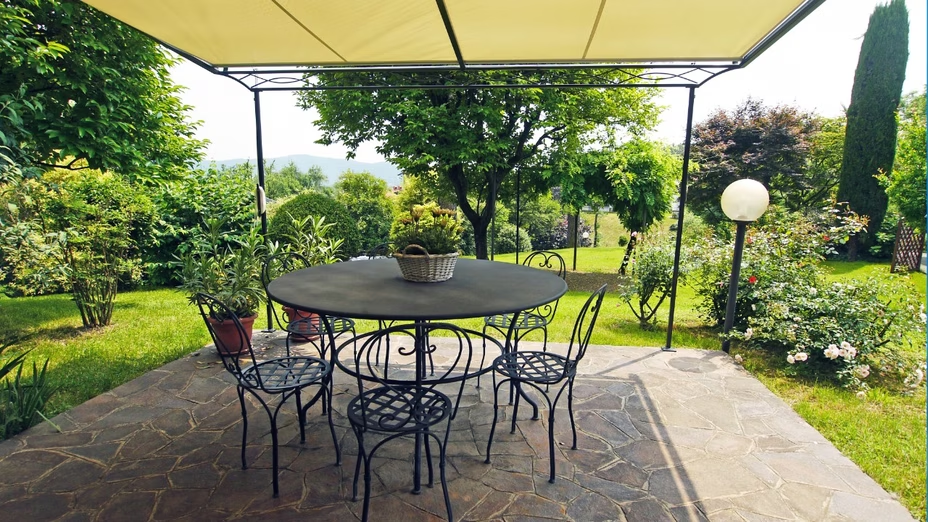
Getty Images
Awnings are having a moment.
The classic home feature has gained new popularity as a way to give outdoor spaces an aesthetic and functional boost. Indeed, the global awnings market size has recently increased from $5.7 billion in 2022 to approximately $7.3 billion in 2023—an impressive jump of 28%. By 2033, that number is expected to reach $14.24 billion.
And it’s no wonder why.
For one thing, awnings often pay for themselves in energy savings. Window awnings can reduce solar heat gain, lowering cooling costs and making buildings more energy-efficient. Plus, patio awnings add easy shade, creating pleasant outdoor spaces that homeowners love.
Justin M. Riordan, founder of Spade and Archer Design Agency in Portland, OR, calls awnings “sunglasses for your house—practical, stylish in the right context, and absolutely essential if you live somewhere that sees sun.”
But there's a wide variety of awnings, with different shapes, styles, materials, and functions. So it's important to know what you're looking for.
Read on to learn why homeowners are so excited about awnings, and how to choose the right one for your home.
Awnings are all the rage
Kadi Higginbotham, a luxury real estate adviser with Spears Group at Compass, says that sun coverings are in high demand because modern homeowners love using their outdoor spaces. She says her Florida clients commonly ask for properties with shaded yards and patios.
“Outdoor living has become a top priority for many homebuyers, especially since COVID,” says Higginbotham. “People really began to appreciate the value of having a comfortable, functional outdoor space.”
Indeed, according to the National Association of Home Builders, outdoor living has climbed to the top of homeowner wish lists. Also, a recent survey from the New Home Trends Institute found that outdoor entertaining and connection to nature both ranked high among the most desired home design features.
Ryan Bullock, strategic real estate adviser at Real Estate Bees, agrees that homebuyers are on the hunt for properties with good outdoor spaces and says that awnings can help homeowners create a desirable spot to lounge—without breaking the bank.
Plus, he notes that awnings are typically a more attractive alternative to other cost-effective options.
“Backyard awnings are on the higher end of shading a yard, especially compared to a beach umbrella, canopy, or pop-up tent,” Bullock says. “Plus, awnings have a better shade cover radius than other options, with more durable material to protect from the weather.”
Of course, smaller awnings designed for doors and windows don’t provide much outdoor shade—but they will help keep the sun out of your home's interior. Window awnings are great for keeping the hot sun out of a too-bright room. Plus, they can add privacy, so next-door neighbors can't look down and see inside.
Different types of awnings
Retractable awnings
A recent survey showed the most popular form of awnings is retractable, and for good reason! Retractable awnings can be rolled or folded up when not in use, providing versatility for different seasons. Plus, they’re durable, cost-effective, low-maintenance, and come in a wide variety of colors and shapes (like concave, slope, and waterfall).
Riordan says this versatility is key for buyers in areas where the weather is known to change. He explains that while homeowners in perpetually warm places often need a full-time covered patio, in rainy places, it’s nice to be able to get shade when needed, then put the covering away when not in use.
He says retractable awnings are “about embracing flexibility, fun, and a little bit of spontaneous shade when you need it most.”
Higginbotham agrees that these are great for homes with changing seasons. And she adds that they’re ideal for smaller patios or decks where a full roof cover might not be practical or affordable.
“Plus, installation is usually quicker and less invasive than a traditional construction project,” she says.
It should be noted that there are many different options when it comes to retractable awnings. You’ll have to decide if you want one operated by crank, motor, remote, or even phone app. Some high-end awnings include weather sensors that notifty the homeowner when it should be put away.
Retractable awnings generally include fabric covers made of cotton or polyester, which are breathable and easy to clean. Retractable window awnings generally cost a few hundred to around a thousand dollars, while larger ones designed to reach over a patio will usually put you back a couple of grand.
Fixed awnings
Fixed awnings are a permanent fixture on a building’s exterior. These are typically inexpensive, usually only a couple hundred dollars, and made of sturdy materials like metal, wood, or polycarbonate. They’re most commonly found on commercial buildings, like restaurants, but can be a great addition to a home’s doors and windows.
While they’re durable, they can require extra maintenance due to perpetual exposure to the elements. These can be great for homes in areas with year-round sun but not be ideal for areas that have heavy wind or snow.
How to choose the right awnings style
If you’re interested in installing an awning, it’s important to choose one that will complement, not clash with, your home. And with so many options for colors and designs, choosing one style might seem daunting.
But Riordan says choosing an awning is simple. He says to know your home’s style and match it.
“A Mediterranean villa might call for something arched and dramatic. A modern home wants clean lines and neutral tones,” he says. “A traditional home? Probably stripes.”
He adds that an awning isn’t just functional—it’s also part of the overall aesthetic. The right awning will boost your curb appeal while the wrong choice will be an eyesore.
“It all comes down to fit. A retro striped awning can charm the pants off a bungalow, but slap that same one on a sleek modern build and it starts to feel like your house borrowed Grandma’s hat,” Riordan says. “A well-matched awning is an architectural accessory—when it aligns with the home’s style, it elevates. When it doesn’t, it confuses everyone, including your neighbors.”
Higginbotham says it’s also important to consider materials. She recommends materials that are UV-resistant and mildew-proof. She also advises homeowners to always check with their HOA, if applicable, and hire a reputable installer familiar with local building codes.
Awnings increase property value
Higginbotham notes that awnings aren’t just a nice feature—they can also be a selling point for buyers. She explains that while awnings don’t raise the appraised value as much as a screened lanai or outdoor kitchen, they can help a home show better and potentially sell faster.
“I’ve had sellers install an awning before listing their home, and it really transformed the space, making it feel more inviting and functional,” she says. “It helped generate more interest and made the home stand out in the market.”
Riordan says he’s seen awnings help sell homes in his area, too.
He explains that his team once staged a midcentury home with a huge west-facing deck that “turned into a frying pan every afternoon.” When the sellers added a sleek, charcoal retractable awning, it was a game changer.
“The house sold in four days, and the buyers cited the outdoor vibe as their favorite feature,” Riordan says.
"Call Eli Torres at (832) 430-2107, for your home buying and selling needs."
Source: www.realtor.com

Eli Torres
Team Lead / Realtor® | One Sixteen Group | eXp Realty, LLC
or another way