3.jpg)
Published September 17, 2024
That A-Frame Life: What It’s Really Like To Live in These Triangular Houses By Realtor.com

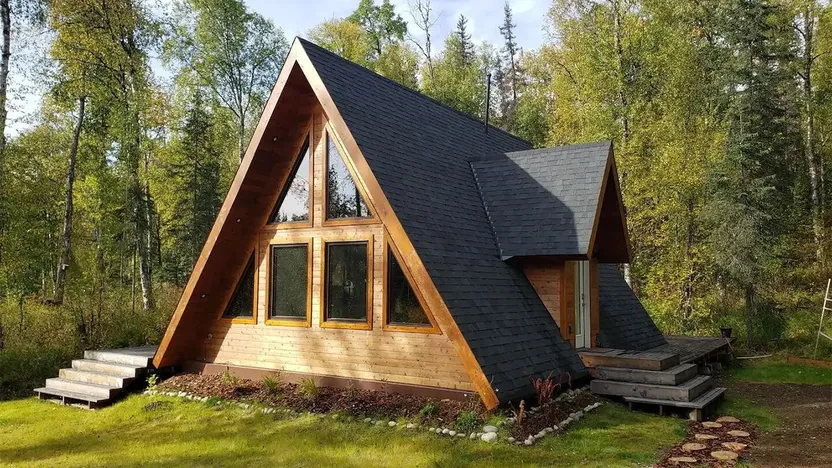

There’s something intrinsically romantic about A-frame cabins. Beyond the setting of lush forests and mountainous backdrops, the architecture itself makes these unique homes feel extra cute and cozy.
And at first glance, A-frames might not seem all that different from other cabinlike dwellings. After all, aren’t they just cabins with really high roofs? Well, not exactly.
The history of A-Frames
A-frames first started popping up in the United States in the 1930s and 1950s, when Americans had more disposable income for vacation homes. One of the first architects to popularize the design was Rudolph Schindler. His work is primarily found around Southern California, and he originally hails from Austria. This makes sense, considering A-frames were more common in mountainous European and Asian locales before making their U.S. debut.
A-frames have a long history of invoking whimsical, forested imagery in the American imagination. It’s quite literally what they were built for: 1950s suburban families looking for a charming, rural retreat. So if you fell in love with the design after renting one for a weekend—you’re in good company.
Nowadays, many people choose to make A-frames their full-time homes. But there’s quite a big difference between renting one of these exotic cabins for a week and living in one. This is why we decided to dig in and hear from those who have done it and find out exactly what it’s like to call an A-frame home.
Here are six key takeaways you’ll want to consider before you commit to the letter-home lifestyle.
1. Quirky, open-concept living
The first thing to know about living in an A-frame is that, for better or worse, the interior layout will feel quite a bit different from a normal home.
“A-frames tend to have unique layouts that can be fun and quirky and create spaces like reading nooks or meditation areas that you wouldn’t necessarily see in a house with a typical floor plan,” says real estate agent Angelica Ferguson, who regularly sells A-frames.
This is great if you have a small family and would enjoy a cozy version of open-concept living—but keep in mind that it might not be a good fit for busier households where sharing space is a problem—like if one person constantly takes meetings while working from home.
A-frame living tip: Open spaces make for great vacation rentals but can be trickier to navigate in the day-to-day of real life. Be sure you’re game for the space-sharing requirements that come with A-frame living.
2. Limited square footage
Despite how open-concept an A-frame may feel on the inside, these homes still tend to be pretty cramped in terms of square footage.
“A-frames are often quite small, which isn’t always ideal—especially for larger families since there’s very limited room as you go upstairs,” says former A-frame dweller Michael Sawyer, of Ultimate Kilimanjaro. “I feel like it would be perfect for people who prefer to live a little more frugally as you only have the space you really need.”
A-frame living tip: A-frames might too tight for bigger families needing more than one bedroom. Since most of these homes tend to have just one large upper loft space for sleeping, you’ll likely end up sharing pretty close quarters at night.
3. Unique acoustics
Speaking of the pros and cons of living in a close quarters, another thing you’ll want to consider before buying an A-frame is the acoustics. The way sound travels in these architecturally unique houses tends to be quite a bit different than in typical homes.
“Where sound is concerned, an A-frame creates unique acoustics due to the angular design and steep pitch,” says Ferguson. “This can create a space that, while often very open and airy, also feels cozy and intimate.”
And when we say intimate, we mean that yes, your spouse will hear you watching Netflix from the loft or running the blender in the kitchen. By the same token, you’ll also be able to play your favorite song and enjoy it throughout the entire house.
A-frame living tip: There is really no way to dampen the sound in A-frames, so be prepared to either do a lot of compromising or get yourself some good noise-cancelling headphones.
4. Sweeping views and natural light
One favorite aspect of A-frame living that we heard repeatedly from experts is this: Despite the high-angle roof, there’s still a lot of natural light thanks to spacious windows that tend to be a staple of the design.
“Personally, I love the sense of connection with nature that comes with living in an A-Frame,” says A-frame dweller and real estate agent Brett Johnson, of New Era Home Buyers. “The tall, angled windows offer stunning views of the surroundings, making you feel like you’re part of the landscape.”
A-frame living tip: A-frames are all about the views, so make sure you love your view before buying in—because you’ll be seeing a lot of it.
5. Maintenance is very roof-centered
As far as maintaining an A-frame goes, one particular aspect of the architecture will require more work than the rest: the roof.
“When it comes to maintenance, regular inspections of the roof and structural integrity are crucial,” says Johnson. “Owners should also be mindful of potential moisture issues, as A-frames can be more prone to leaks.”
Beyond potential leaks and issues with structural integrity, A-frame experts also recommend regularly checking the gutters.
“The steep pitch of the roof can lead to increased stress on gutters, so I would stay on top of those and also keep an eye on drainage around the home,” advises Ferguson.
A-frame living tip: Take advantage of good weather to inspect your roof regularly, or hire someone to look at it at least once per year. Don’t wait until a big winter or summer storm to determine if everything is in good working order.
6. Resale is good
If and when you do decide to invest in an A-frame style home, you can at least rest assured that it will hold and possibly even gain value while you own it.
“Resale value on A-frames is amazing!” says Ferguson. “It’s a hugely popular architectural style, and all of the A-frame homes I have sold have received multiple offers.”
A-frame living tip: Remember what we said about A-frames and the American psyche? Well, let’s just say they’ve maintained their allure for nearly a century—and there’s no indication that will change. If you buy an A-frame in a good location, you’re unlikely to run into any issues selling it later on.
Are you interested in living the “A” life? Then check out these A-frame listing photos to start your search.
14126 S Eau Claire Acres Cir, Gordon, WI
Price: $149,900

(Realtor.com)
3000 Mount Alta Rd, Camptonville, CA
Price: $799,000

(Realtor.com)
18 Peter Dr, Wappingers Falls, NY
Price: $950,000
"Call Eli Torres at (832) 430-2107, for your home buying and selling needs."
Source: www.realtor.com


