3.jpg)
Published January 27, 2025
Is the Laundry Chute Ready for a Comeback? By Realtor.com

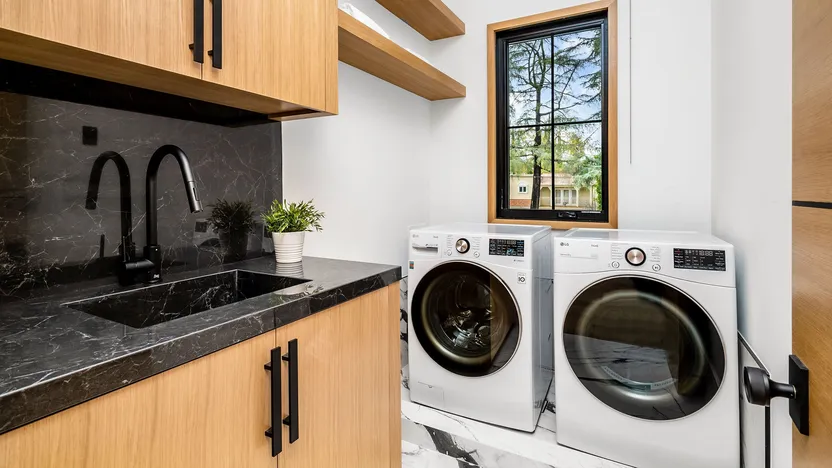

When my mom moved into her current house, she showed me what she thought to be one of the coolest, most unique features of her new home: a laundry chute in the upstairs bathroom.
She’d bought the property from a much older couple, who had installed it so that they could avoid lugging baskets of laundry down the stairs. It was a smart addition, we both thought, and it added character, too.
After some oohing and ahhing, dropping some “test” socks down the chute, and even suggesting that perhaps my next place could have a laundry chute, too—I started wondering why laundry chutes aren’t more popular.
They’re found in older houses, sure, and apparently in some homes where older people need the convenience, but they’re rare in new builds. But could this charming upgrade be due for a comeback?
What is a laundry chute?
The laundry chute was invented in the late 19th and early 20th centuries and most commonly built into hotels and affluent homes. Throughout the 20th century, the laundry chute evolved, eventually being made with stainless steel and offering fire resistance. It became more common, even in more modest family homes.
Eventually, however, this hidden passageway fell out of favor.
Justin M. Riordan, founder of Spade and Archer Design Agency in Portland, OR, says that chutes were common when laundry rooms were commonly found in a building’s basement, to prevent flooding. Eventually, the invention of the washing machine overflow pan allowed homeowners to bring their washers and dryers inside and upstairs without fear of water damage.
People were able to move their laundry hookup to a more convenient spot, like outside their bedrooms or even inside a closet.
“Suddenly, the need for a chute to ferry laundry downstairs vanished. It’s practical progress, but it’s left laundry chutes as more of a novelty than a necessity in modern homes,” Riordan explains.
Ebonee Johnikin, a real estate agent in Laurel, MS, says that she’s seen a handful of old homes with laundry chutes. She says that buyers, especially those seeking historic homes, “love the character and originality that features like laundry chutes bring.”
However, she admits that they’re not necessarily a big selling point. Most new builds, or renovated homes, prioritize open floor plans and often feature centralized laundry rooms with specific drop-off and organization spaces for families.
“These layouts make chutes less practical,” she adds.
Diana Hathaway, an interior designer and author of “Sell Your Home Without Losing Your Zen,” also notes that safety concerns have made these clothing caverns less popular. For one thing, they could create a potential fire hazard: acting as a chimney that could quickly move flames and smoke between floors. (Building codes now require dedicated sprinklers for laundry chutes.) Child and pet safety is also an important consideration
Laundry chutes aren’t prioritized in new construction
Experts say that chutes can be a fun addition to a home, but they don’t typically make it onto a buyer’s must-have list.
Jameson Tyler Drew, president of Anubis Properties in the Los Angeles area, where many homes are newer builds, says he’s never come across a home with a laundry chute, and he’s never had a buyer ask for one.
On the other hand, Max Carr, a real estate agent also in Southern California, says that the laundry chute’s rarity can be a good thing.
“Adding unique or uncommon upgrades is a nice way to differentiate a home from other competing properties on the market, especially with so many similarities in flipped/renovated homes and their finishes/color selections,” he says.
Laundry chutes are only “occasionally” requested by custom home clients, adds Hathaway. However, “large-scale developments, which are the bulk of new homes built now, are less likely to sacrifice space and layout” for a laundry chute, which is commonly thought to not increase marketability or sale price.
“I have not personally received a request for one in my design, for either remodels or new homes,” she adds.
A modern take on the laundry chute
While traditional laundry chutes may not be particularly desirable or functional, Jennie Berger, design consultant and owner at Property People, notes that some homeowners have shown an interest in vacuum-powered chutes.
When an article of clothing is held up to the mouth of the chute, the vacuum transports the item to any room, removing the problem of needing a two-story home with a laundry room in just the right spot. Plus, it’s a satisfying process to watch, with clothes disappearing seamlessly into a wall.
“Vacuum-powered laundry chutes offer the ultimate convenience, allowing laundry to be sent to any room in the house,” Berger says. “While they might be less common than traditional gravity-fed chutes, they are gaining popularity among those who want the most efficient and flexible laundry solution.”
Still, these chutes aren’t perfect. Drew calls them “more gimmick than game changer” and claims these systems can be “noisy, energy-hungry, and prone to clogs.”
He adds that these vacuum-powered chutes have gotten popular on social media because “it’s fun to watch videos of socks flying through tubes like they’re part of a theme park ride,” but he notes that “for the price of installing one, you could probably put a laundry room on every floor.”
How to build a laundry chute in your home
While laundry chutes may not be the most popular modern amenity, and may not add to property value, they make sense for some people. Not every home is a new build with a convenient washer-dryer setup next to the upstairs bedrooms. Some people, like the past owners of my mom’s house, find themselves lugging heavy laundry hampers downstairs and wishing there were a better way.
So, if one wanted to install a laundry chute, what would it take?
“If your home’s layout already lends itself to a straight vertical shot from floor to floor, adding a laundry chute is doable,” Drew says.
Berger confirms that, while adding a chute to new construction can be relatively simple, in an existing home, it can be challenging and expensive to work around wires or plumbing.
“It requires careful planning, professional installation, and modifications to the home’s structure,” she says.
Drew also adds that pricing will depend on the materials used. He also says homeowners should choose a chute door that matches their home’s style and warns not to skimp here.
“If your budget’s tight, consider just upgrading your laundry setup upstairs instead,” Drew says. “Sometimes the simplest solution is the best one.”
The bottom line: The laundry chute could make a comeback, depending on trends
When it comes down to it, it seems modern homeowners have largely moved on from laundry chutes. Sure, they have a place in some homes, but Drew says they’re “more of a charming conversation starter than a modern-day upgrade.
“Laundry chutes are like bell-bottom jeans—nostalgic, quirky, and not exactly on everyone’s must-have list,” he adds. “Sure, they’re fun and whimsical, but the practicality isn’t quite there anymore.”
.
"Call Eli Torres at (832) 430-2107, for your home buying and selling needs."
Source: www.realtor.com