3.jpg)
Published April 25, 2025
7 Kitchen Updates Perfect for Anyone Planning To Age in Place By Realtor.com

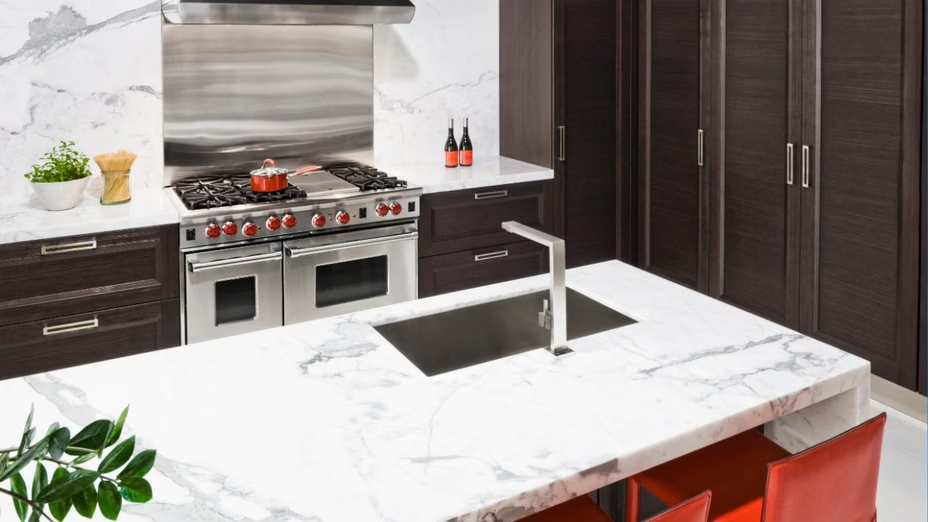
The practice of aging in place—homeowners remaining in their home through their golden years—is trending. In fact, according to a recent study by AARP, three out of four older adults hope to stay in their current home rather than downsize or move to a retirement community.
But not all homes are designed with retirees—and accessibility—in mind. In fact, according to research from AARP, only about 10% of homes nationwide are fully prepared for senior living. Staircases can be troublesome, slippery tile can be dangerous, and standard-height light switches can be inconvenient. Kitchens, in particular, can be a point of stress for older homeowners.
"What worked for us at 35 might be a literal pain at 75," says Justin M. Riordan, founder of Spade and Archer Design Agency in Portland, OR. "Dexterity, balance, and strength all shift as we age—turning once-simple tasks like reaching for a mug or twisting a stove knob into precarious balancing acts."
Indeed, Crystalle Guss, a real estate agent in Denver, says lot of her clients are buying with long-term living in mind—especially when it comes to multigenerational living. She says this can be a big ask in her area because many of the homes built before the 2000s tend to be more boxed in, which can be tough when mobility becomes a factor.
"We’re looking for wider walkways, fewer steps between important areas like the stove, counter, and sink," she says of home tours with clients. "We're also looking for lower storage that’s easy to reach. Even small features like pull-out shelves or lazy Susans can make the space more functional over time."
Here's what you need to know about your kitchen if you're planning to age in place.

Why future-proofing the kitchen is important
Max Carr, a real estate agent in California's Orange County, says that most buyers who are shopping with accessibility in mind know they'll probably need to do some renovations.
"Generally speaking, those with accessibility concerns beyond the number of stories in a home tend to arrive with the expectation that they'll need to renovate," he says. "Narrowing a home-hunt down to only those homes with rarer accessibility features runs the risk of eliminating a large number of homes which would be potentially viable with minimal renovations."
And for those looking to stay in their home through old age, bathroom updates seem to be first priority. According to a survey by the National Association of Home Builders, the most popular aging-in-place home improvements were bathroom-related, such as installing higher toilets and curb-less showers or building an all-new bathroom on the man floor.
But builders also see a lot of requests for age-related kitchen upgrades, especially for homeowners with mobility issues. A more open layout may be essential for those in a wheelchair, while pullout shelves can be a great help for those no longer able to reach the back corner of the pantry.
And Riordan says kitchen upgrades aren't just about convenience; a typical kitchen design can also pose safety risks.
"The kitchen, with its sharp knives, hot surfaces, and need to constantly move between zones, can quickly become the most dangerous room in the house," he says.
With this in mind, Riordan adds that it's never too early to start thinking about safety and accessibility, especially in your kitchen.
"By designing for mobility and safety now, you reduce the risk of injury and increase the chance of remaining independent in your home for years to come," he says.
Ways to future-proof your kitchen
There are plenty of ways to make a kitchen easier to navigate—and different homeowners will have different needs. Here are some upgrades experts recommend for those hoping to age in place.
1. Create an open layout
When it comes to an accessible kitchen, Riordan says layout is everything; and the more open, the better.
"Imagine the kitchen as a dance floor—you want wide, open spaces for smooth moves, not tight corners that make you cha-cha into the dishwasher," he says.
He notes that both a U-shaped or L-shaped layout can be great but says, no matter the kitchen shape, homeowners should ensure there's enough clearance for a walker or a wheelchair.
Guss adds that open-concept kitchens might be thought of as aesthetic choice, with most people requesting it because they like the way it looks.
"But this kind of layout can actually make a big difference down the line—especially if someone ever needs a walker or wheelchair," she says.
2. Lower the cabinets
Riordan says lowered cabinets can be an important part of an accessible home. Older adults might not feel safe standing on a stool to reach the tallest cabinets, and even typical upper cabinets will be unreachable for wheelchair users.
"Bring the high stuff down and the low stuff out," he suggests. "Pullout drawers and lazy Susans are the real MVPs."
Once you've got the cabinets installed, Riordan recommends swapping out tiny metal knobs for large, grippy, silicone-covered ones that are easy to grasp.
3. Use toe-kicks and foot petals
Some seniors have trouble reaching up high—but bending down low can also be a tricky task! Luckily, toe-kick drawers can be easy to open. Simply tap the drawer with your foot, rather than bending down to yank it open.
The same idea applies to trash cans with foot petals. Why bend over to open the lid when your foot can do the work?
4. Lower the countertops
Lower counters can be a must-have for wheelchair users. But even if you don't end up with mobility issues, most people shrink as they age, so easy-to-reach countertops may be beneficial.
Jennie Berger, design consultant and owner at Property People, says some homeowners might even want to place counters at different heights in different spaces within the kitchen.
"Instead of just lowering all counters, consider having a standard-height section for standing tasks and a lower section specifically for seated work or baking," she says. "This caters to various needs and preferences."
5. Choose integrated seating at counters or islands
If you're already investing in new countertops, Berger suggests creating integrated seating at the counter or island.
"Designing overhangs that comfortably accommodate wheelchairs or stools allows for more inclusive participation in kitchen activities," she says, reminding homeowners to make sure the path to the overhang area is also accessible.
6. Install voice- or touch-activated faucets and lighting
Lower light switches can be a game changer for many seniors, but why not take it a step further? Berger suggests voice- or touch-activated features for added convenience.
"These eliminate the need for twisting knobs or flipping switches, which can be difficult for those with arthritis or limited mobility," she says. "Think about motion-sensor lighting under cabinets as well."
7. Opt for smarter, easy-to-use appliances
Riordan suggests installing ovens and microwaves at waist-height to eliminate the need for bending or reaching overhead. He also says to find appliances that are simple and easy to use.
"Choose appliances with intuitive, low-maintenance controls—no one wants to decode hieroglyphics just to make toast," he says.
Cost of future-proofing the kitchen
Future-proofing can look very different for each kitchen—and come with a range of price tags. Small changes like switching out faucets, lights, and cabinet pulls are relatively inexpensive. But swapping out the cabinets and changing the layout can cost tens of thousands.
With this in mind, Carr notes that if you're looking to buy a home with an accessible kitchen, you should discuss your needs with your agent in the early stages of your home hunt.
"While you can always renovate for your individual needs later, the cost of needed renovations need to be factored into your purchase price at the outset," he says. "Many times it's simpler and more cost-effective to find a home better suited to your needs upfront."
Still, medically necessary changes are tax deductible, and some experts estimate that accessibility upgrades can boost a home’s resale value by 5% to 10%.
"Call Eli Torres at (832) 430-2107, for your home buying and selling needs."
Source: www.realtor.com
|


or another way