3.jpg)
Published December 16, 2024
6 Babyproofing Tips To Keep Your Tiny Houseguests (and Your Stuff) Safe This Season By Realtor.com

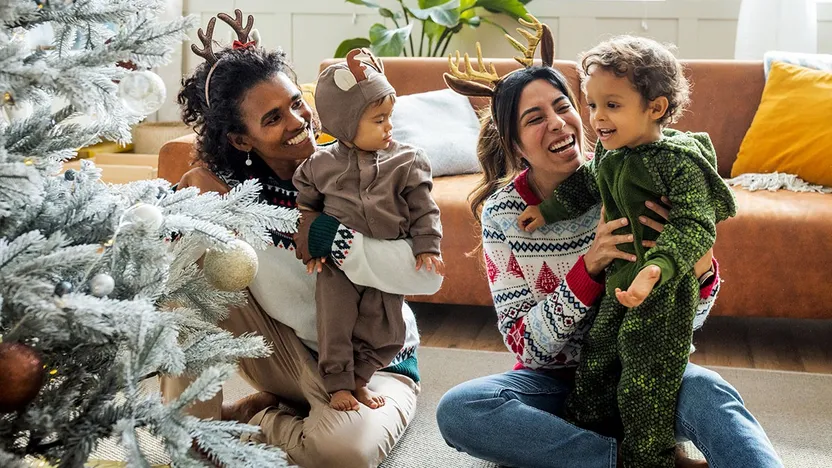

Do you consider yourself a host or hostess with the mostest—as in, you stock your guest bath with products and note guests’ dietary restrictions? Congrats! However, even the most thorough hosts might be unprepared for one common curveball during the holiday season.
Hosting tiny guests. (And no, we don’t mean the Elf on the Shelf.)
We’re talking about friends or families bringing their babies or littles to your un-babyproofed home for the holidays.
And while we can all agree it’s ultimately the parents’ job to keep them safe, it’s also a good idea to do some prep work before they arrive to ensure that no harm comes to them (or your stuff) while they’re visiting.
Here are six home expert tips to help prepare you to host tiny guests this holiday season and avoid unexpected disasters.
1. Move your valuables
That antique vase set precariously on your living room side table? It’s time to tuck that breakable item away. Even babies under a year old can be mobile enough to crawl and grab things or bump into them, and you don’t want that thing to be fragile and irreplaceable.
“You generally don’t want sharp, breakable objects within arm’s length of a little one,” says lead designer Anna Tatsioni, of Decorilla. “That can sometimes mean tucking your priceless vase in a safe space, whether on an out-of-reach surface or removing it from a room you know they’ll be in.”
Pro tip: Ask the parents how mobile their little one is to determine what objects might be safe (and which ones won’t be) while they visit.
2. Safely store anything toxic
For most of us, we never consider the things in our homes that might be toxic. Unless you have a dog that will eat just about anything, chances are you’ve got at least a few potentially dangerous items out in the open (and possibly even on the floor) that a tiny guest could get into.
We’re talking about cleaning supplies, rodent traps, and even some of your houseplants.
“Something that people often forget to check is their houseplants,” says home expert Seamus Nally, CEO of TurboTenant. “Tons of houseplants are toxic to humans, but we as adults generally aren’t too worried about this because we aren’t eating the fallen leaves and petals.”
Pro tip: Do a little research on the safety of the houseplants (and any other potential toxins) you have lying around your home, or consider moving them to higher spaces just to be safe.
3. Take stock of your furniture
Sometimes, the things you suspect the least can be the most dangerous for littles. One example? Your furniture.
Mitigating sharp edges is one thing to consider, as is furniture that could tip over onto a child.
“Toddlers love to climb, and unstable furniture can easily tip over, causing injury,” says designer and real estate agent ??Joy Aumann, of LuxurySoCalRealty. “Secure heavy furniture to the wall using furniture anchors.”
Pro tip: Consider doing this for any child moving around your home freely. Even if they aren’t climbers, a simple tug could be all it takes to tip something over and onto them.
4. Have a plan for your pets
Some pets do just fine with kids, and others—not so much. If your pets haven’t ever spent time around young children, they might find the experience even more daunting than you do.
“If I know my pet isn’t good with kids, I would consider having someone I (and they) trust to look after them,” says Tatsioni. “I’d also communicate this with their parents ahead of time so they know to expect this.”
Pro tip: If you aren’t sure how well your pets, and especially your dogs, will react to small visitors (who might not have great animal etiquette themselves) and don’t have a friend who can watch them, be prepared to have separate spaces away from the kids where they can hang out.

(Getty Images)
5. Don’t forget about the kitchen
During the holidays, we tend to spend a lot of time gathering in the kitchen, but these spaces can also be some of the most dangerous for young children.
“Never, ever leave the stove unattended when there’s something cooking and there are children around,” says Tatsioni. “Keep sharp utensils far out of reach, and don’t leave open bottles unattended either.”
Pro tip: Practice good stove safety by using back burners as much as possible and making sure pot handles are turned inward so a child can’t reach up and grab them.
6. Block access to unsafe areas and set up safe ones
Depending on the child, the parents, and your home—babyproofing everything might not be possible. Whether this is your home office, gym, or even just a really tall staircase, block it off.
“Kids love to explore and will take whatever opportunity comes their way to satisfy their curiosity,” says Tatsioni. “Baby gates, especially ones that are easily installable, are a go-to for stopping kids going near stairs.”
Another solution is to close doors and, if necessary, keep them locked. Ditto for adding cabinet locks on easy-to-reach storage areas housing dangerous items.
Then talk to the parents about setting up just one or two safe spaces for the kiddos—and restricting them to those areas unless under supervision.
“I’d also make sure to keep socializing in those easily kidproofed spaces, whether that’s a dining room, sitting room, or lounge area,” says Tatsioni.
Pro tip: Be realistic and communicate openly with the parents about the prep you’re able to do (or not able to do) and your expectations. Keeping littles safe during the holidays is important, but it should also be a team effort between parents and hosts!
"Call Eli Torres at (832) 430-2107, for your home buying and selling needs."
Source: www.realtor.com